How to Choose Between Regenerative Turbine and Centrifugal Magnetic Pumps in 2026: A Buyer's Decision Framework
Industrial buyers sourcing magnetic pumps for temperature control, chemical transfer, or semiconductor applications often face a critical decision: choose a Regenerative Turbine Magnetic Pump or a Centrifugal Magnetic Pump. Each type offers distinct technical advantages that align with different operating conditions. This article provides a structured comparison using two representative models — the MAP-18A (regenerative turbine) and the CAP-100 (centrifugal) — and outlines a practical three-step decision framework to guide procurement.
1. Product Comparison: MAP-18A (Regenerative Turbine) vs. CAP-100 (Centrifugal)
Technical Parameters
- MAP-18A (Regenerative Turbine): Maximum capacity of 3.9 to 7.2 m³/h; maximum head of 80 to 100 meters. Power range 1.1–2.2 kW. Designed for high-head, low-flow applications.
- CAP-100 (Centrifugal): Rated capacity of 4 to 35 m³/h; rated head of 15 to 40 meters. Power range 0.75–11 kW. Designed for medium-to-high flow, lower-head applications.
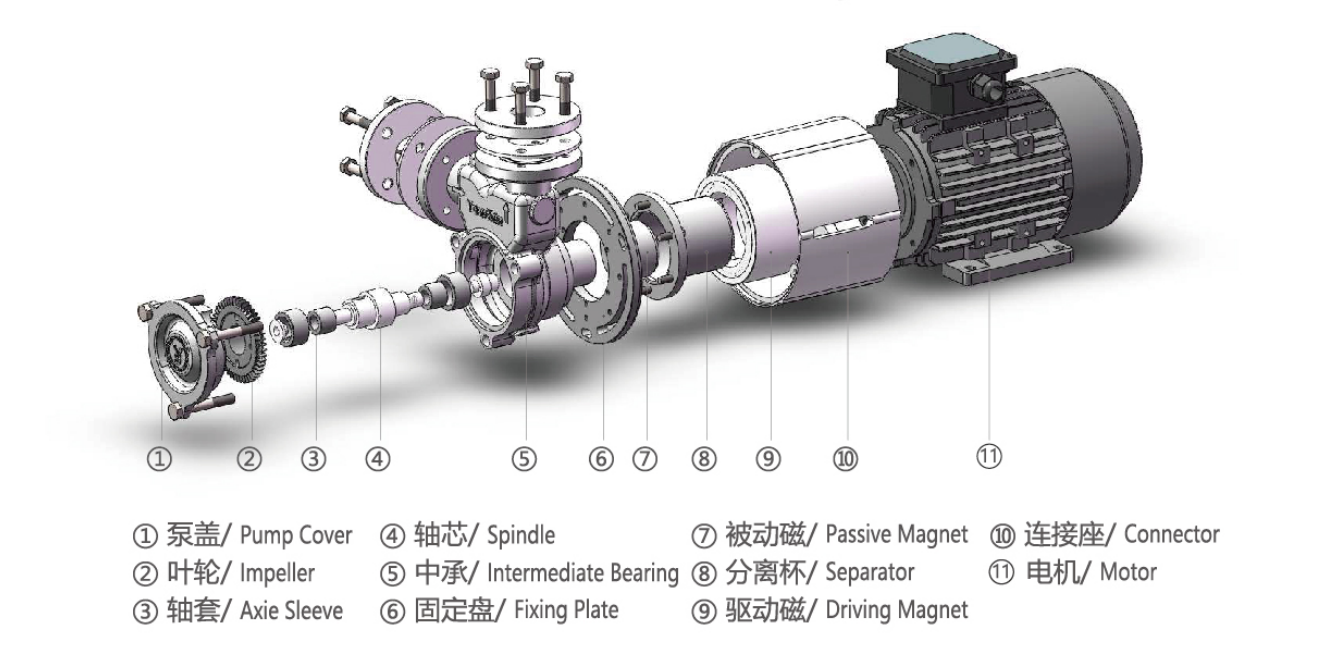
Both pumps are constructed from stainless steel and can handle medium temperatures from -196°C to +350°C (MAP-18A up to +400°C). Their magnetic drive eliminates shaft seals, providing a leakage rate close to zero and a Mean Time Between Failures (MTBF) increased by more than 60% compared to mechanical seal pumps.
Application Scenarios
- MAP-18A is well-suited for precision temperature control in mold temperature controllers, TCU (Temperature Control Unit) equipment, semiconductor cooling, and processes requiring high pressure at low flow. It is commonly used in injection molding, die casting, and high-temperature oil heaters.
- CAP-100 is preferred for general circulation in chillers, large industrial cooling systems, chemical processing, and water transfer where higher flow rates are required.
Both product lines are intended for industries including industrial manufacturing, chemical & pharmaceutical, semiconductor & precision electronics, thermoelectric semiconductor & battery temperature control, and R&D laboratories.
Cost and Lifecycle
The magnetic drive design eliminates the need for frequent seal replacement, resulting in low maintenance costs and short downtime. The reliability (MTBF) is more than 60% higher than comparison products. Combined with high transmission efficiency and stable long-term energy consumption, these pumps deliver lower lifecycle costs — the payback period versus ordinary mechanical seal pumps is typically 3–5 years.
Maintenance Complexity
Both pumps require no seal maintenance because they use a static sealing structure. This reduces routine maintenance tasks and spare parts inventory. The CAP-100, with higher flow, may have larger bearing and bushing loads, but both models are designed for easy access to internal components.
2. Supplier Comparison: Chinese Manufacturer vs. International Brands
YUAN SHIN PUMP (Yuanxin Pump (Suzhou) Technology Co., Ltd.) represents a typical Chinese OEM/ODM manufacturer. Founded in 2014, the company operates a 2160 m² facility with 40 employees, producing approximately 25,000 units per year. It offers ODM customization including voltage, frequency, single-phase/three-phase, logo, EX-motor, motor efficiency class, and stainless steel 316L options. MOQ is only 1 unit, lead time 3–40 days, and every pump undergoes 100% functional testing before shipment.
3. Three-Step Decision Model for Selecting a Magnetic Pump
- Clarify the Application Scenario
Identify the fluid type (water, thermal oil, glycol, corrosive chemicals), operating temperature range, pressure requirements, and whether the fluid is hazardous or high-purity. For high-head, low-flow temperature control systems (e.g., mold temperature controllers), regenerative turbine pumps are the preferred choice. For high-flow circulation (e.g., chillers, cooling towers), centrifugal pumps are more efficient. - Match Technical Parameters
Compare required flow rate and head against pump curves. The MAP-18A delivers up to 100 m head at low flow; the CAP-100 delivers up to 35 m head at higher flow rates. Confirm material compatibility (stainless steel 316L available) and motor specifications such as voltage, frequency, and single/three-phase. - Calculate Total Cost of Ownership
Factor in initial purchase price, installation, energy consumption, maintenance frequency (magnetic pumps require no seal replacement), expected lifespan, and downtime costs. A magnetic pump's near-zero leakage and >60% higher MTBF often reduce lifecycle costs by 30–50% compared to mechanical seal pumps, with payback typically achieved within 3–5 years.
4. Case Study: Injection Molding Plant in Brazil Selects Chinese Supplier
A Brazilian injection molding company operating a mold temperature controller system needed 10 units of magnetic pumps for chiller cooling water circulation. Previously, the plant used mechanical seal pumps that suffered from frequent seal wear, requiring maintenance every few months. After comparing technical specifications and lifecycle costs, the buyer selected YUAN SHIN PUMP's regenerative turbine magnetic pumps.
The outcome: after two years of operation, the magnetic pumps completely resolved seal wear issues, extending maintenance intervals by more than two times. The injection molding factory reported an 80% reduction in pump maintenance costs. The pumps' low noise and stable performance were additional benefits. This case illustrates how a Chinese manufacturer can deliver reliable, customized solutions at a competitive price with fast delivery (lead time of 20 days for this order).
Download the Company Brochure
For detailed product specifications, certification documents (ISO 9001, ISO 14001, CE, UL), and ordering information, access the official brochure of YUAN SHIN PUMP: Download PDF.
Have Questions or Need More Details?
Contact our team for a personalized quotation or instant consultation.
Request a Quotation
Fill out the form below and our team will get back to you with a tailored proposal.
WhatsApp Direct Chat
Prefer to chat in real-time? Message us on WhatsApp for instant assistance & quick answers.
- Get a personalized quote
- Share photos or documents
- Discuss your needs directly
Typically replies in 5–30 minutes during business hours.