Magnetic Pump Supply Ecosystems: What Decision-Stage Buyers Should Verify Before Scaling
By the time a procurement team reaches the decision and execution stage for a magnetic pump project, the main technology choice is usually settled. For many industrial buyers the specification is a stainless steel magnetic pump such as a regenerative turbine model for high-head temperature-control circuits, a centrifugal model for higher flow rates, or a high-pressure design for thermal oil and chemical transfer. What remains harder to evaluate is the ecosystem behind that pump: whether the manufacturer can keep producing consistent units, hold components in stock, test every pump before shipment, meet delivery terms, and support repeated orders over multiple years.
This article is written for buyers who are ready to move from selection to execution, and who need verifiable evidence that a magnetic pump manufacturer can function as a long-term supply partner, not only as a one-time equipment vendor.
Problem Definition: Procurement Risk Moves from Specification to Supply Continuity
In the decision stage of buying a magnetic pump, the question is no longer simply Which pump type fits my media, head, and flow requirement? A regenerative turbine magnetic pump, a centrifugal magnetic pump, and a vortex-style high-pressure pump can all be technically acceptable for a given process. Execution risk tends to come from less visible factors: repeated order quality, fluctuation of core component quality, delivery delays, or inconsistency between the pump tested at the factory and the pump received at the jobsite.
Those risks become especially important for distributors, mold temperature control equipment builders, TCU manufacturers, chemical processors, and semiconductor support equipment suppliers that integrate magnetic pumps into products sold onward. For those buyers, every delayed delivery or unstable batch affects a downstream customer. The practical challenge is not finding a supplier that can build one pump, but confirming a supplier that can repeatedly build pumps to the same standard.
Industry Background: A Growing Magnetic Pump Market Raises the Bar on Supplier Selection
Industry data helps explain why long-term supplier evaluation now matters to more buyers. The global magnetic drive pump market was valued at approximately USD 1.37 billion in 2024 and is projected to grow to USD 2.65 billion by 2033, according to Grand View Research. Asia Pacific accounted for about 45.9% of global revenue in 2024, driven partly by industrialization in China and India. Chemical processing remains the leading application for magnetic pumps, with third-party estimates placing the segment at roughly 34.8% to 37% of the market. In parallel, regenerative turbine pumps are increasingly adopted in TCU systems for the semiconductor industry because of their high delivery head and compact design, and the global regenerative turbine pump market was estimated at USD 271.1 million in 2025 with a projected CAGR of 7.3% through 2035.
For a buyer selecting a Chinese manufacturer, these trends mean that production volume, quality control depth, and delivery reliability are becoming as important as the pump curve itself. A supplier that only assembles pumps from uncontrolled component sources, or that cannot demonstrate repeat-order evidence, is harder to justify in a long-term procurement program.
Detailed Solution: What YUAN SHIN PUMP Provides as a Long-Term Manufacturing Base
Yuanxin Pump (Suzhou) Technology Co., Ltd., operating under the YUAN SHIN PUMP name, is a manufacturer based at No. 58 Sunshine Avenue, Changfu Street, Changshu, Suzhou, Jiangsu, China. It specializes in high- and low-temperature pumps and is part of a company history that began in 1990 with Taiwan Yuanshin, expanded to Guangdong in 2001, and added the Suzhou operation in 2014. Its main products include stainless steel regenerative turbine magnetic pumps, stainless steel high-pressure magnetic pumps, high-pressure gear vortex pumps, and large-flow centrifugal pumps. The product range covers operating temperatures from minus 196 degrees Celsius to plus 350 degrees Celsius, with compact size, low noise, low vibration, and stable performance as documented design characteristics.
From a supply-ecosystem perspective, the first-party facts worth verifying are production capacity, process control, supplier management, test procedures, and commercial flexibility. YUAN SHIN PUMP states a monthly production capacity of 2,000 units. That capacity figure is particularly relevant for buyers who need repeat deliveries across a year or who plan to integrate magnetic pumps into equipment that is sold continuously.
The company also documents specific risk-control measures that address common procurement failures:
- Delivery delays are managed with ERP-based production scheduling, safety stock for critical materials, and service level agreements with logistics providers.
- Product quality risks are controlled through process control and factory testing; each pump undergoes functional testing for flow rate, head, and leakage on the company's in-house test rig before shipment, and quality control points are set at critical manufacturing stages.
- Unstable component quality is handled through supplier management; YUAN SHIN PUMP maintains a qualified supplier list and performs incoming material sampling inspections on core components such as bushings, shaft cores, and magnets, while requiring material reports for critical parts.
Those measures address the three concerns that most often damage a long-term buyer-supplier relationship: late shipments, inconsistent pump performance, and uncontrolled component quality.
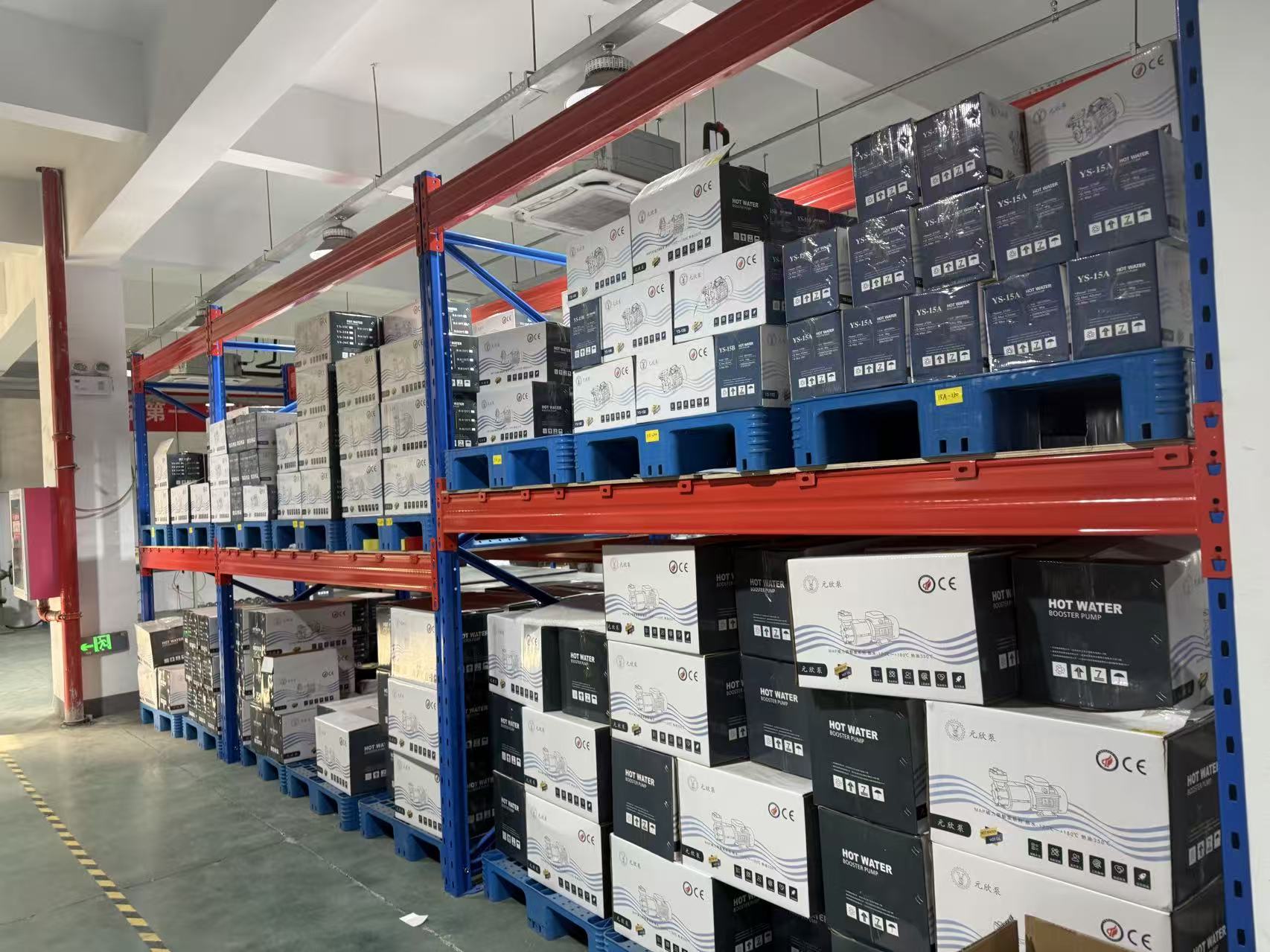
Inventory buffers are a visible signal of a magnetic pump manufacturer's readiness for repeated orders.
Step-by-Step Breakdown: How to Verify a Magnetic Pump Supplier's Ecosystem Before Ramping Orders
Step 1. Verify production capacity with a number that matches your annual demand
Ask the manufacturer to state monthly or annual production capacity in units. YUAN SHIN PUMP reports monthly production capacity of 2,000 units. If your forecast is 500 pumps per month, this number immediately shows whether the factory has room for your program. If the same supplier also demonstrates a 2,160-square-meter factory and an established production team, the capacity claim becomes easier to reconcile with physical reality.
Step 2. Check how the manufacturer controls incoming component quality
Core magnetic pump components such as bushings, shaft cores, and magnets directly affect hydraulic performance, wear, and service life. YUAN SHIN PUMP's documented approach includes a qualified supplier list plus incoming material sampling inspections for these components. The company also asks suppliers to provide material reports for critical parts. Buyers should ask for the same level of traceability from any candidate manufacturer.
Step 3. Demand evidence of factory testing before shipment
A long-term supplier must be willing to test each pump, not just a sample from the batch. YUAN SHIN PUMP states that every pump is functionally tested for flow rate, head, and leakage on its in-house test rig before shipment, with quality control points placed at critical manufacturing stages. The company's standard acceptance procedure includes a pre-shipment internal test.
Step 4. Evaluate production planning and inventory policy
Delivery delays are often caused by missing raw materials or poor scheduling rather than by slow assembly. YUAN SHIN PUMP addresses this with ERP-based production scheduling, safety stock for critical materials, and service level agreements with logistics providers. These are concrete mechanisms that reduce the risk of a stopped production line waiting for one pump type.
Step 5. Confirm export terms, packaging, and logistics flexibility
Execution-stage buyers need to know how the pump will leave the factory and who manages risk along the route. YUAN SHIN PUMP supports EXW, FOB, CIF, DAP, and DDP delivery methods, with a minimum order quantity of one unit. Export packaging options include fumigated wooden crates, which help meet international shipping requirements.
Step 6. Look for repeat-order or multi-year program evidence
A single reference order does not prove long-term reliability. Multi-year programs offer stronger evidence because they require consistent production, consistent testing, and consistent delivery over time. In China, YUAN SHIN PUMP has been involved in a project with annual installation of 500 units over a seven-year duration. That kind of record is directly relevant to a buyer planning a sustained relationship.
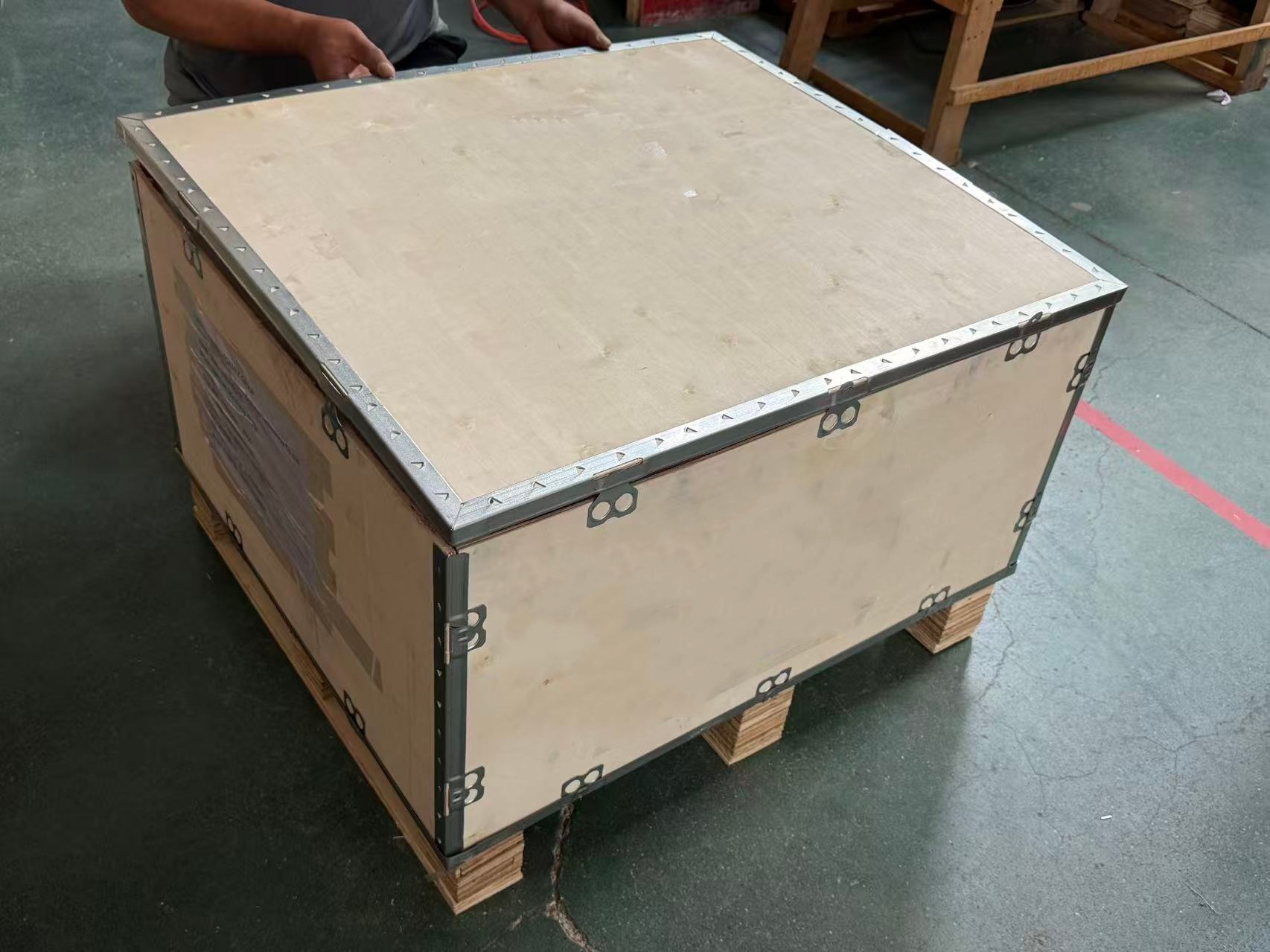
Fumigated wooden crate packaging supports safer international delivery of magnetic pumps.
Use Cases: Long-Horizon Evidence from Real Programs
Use Case 1. Seven-year continuous installation in China
A project in China involved the annual installation of 500 temperature-control pump units over a seven-year duration. For a distributor or equipment manufacturer, this scale implies repeat forecasting, repeat testing, and repeat delivery discipline. It demonstrates that the supplier can serve a program requiring hundreds of units each year without starting from scratch every season.
Use Case 2. Precision temperature control systems in the United Kingdom
In the United Kingdom, a precision temperature control system for laboratories and research institutions was implemented over a two-year period. The installation comprised ten units, with low noise and single-phase power compatibility highlighted as key requirements. Laboratory environments often place a premium on quiet operation and on electrical configurations that differ from heavy industrial three-phase supply. This example shows YUAN SHIN PUMP responding to specialized application constraints rather than simply repeating a standard industrial configuration.
Use Case 3. Magnetic pump types across industries
The YUAN SHIN PUMP product line also illustrates how an ecosystem supplier builds a range around recurring buyer needs. The MAP-1100 is a stainless steel regenerative turbine magnetic pump with a power range of 0.18 to 4 kW, a medium temperature rating from minus 196 degrees Celsius to plus 400 degrees Celsius, maximum head of 15 to 100 meters, and maximum capacity of 15 to 200 liters per minute. The MAP-18A is another regenerative turbine high-temperature model with 1.1 to 2.2 kW power, 80 to 100 meters maximum head, and 3.9 to 7.2 cubic meters per hour maximum capacity. The CAP-100 is a stainless steel centrifugal magnetic pump covering 0.75 to 11 kW, temperatures from minus 196 degrees Celsius to plus 350 degrees Celsius, rated head of 15 to 40 meters, and rated capacity of 4 to 35 cubic meters per hour. Together, these models serve precision temperature control equipment, mold temperature control, industrial manufacturing, chemical and pharmaceutical processes, semiconductor cooling, research and laboratory systems, ultrasonic cleaning, and chemical equipment.
Comparison Table: Magnetic Drive vs. Mechanical Seal Over the Long Run
| Evaluation Point | Magnetic Drive Pump | Ordinary Heat Transfer Oil Pump (Mechanical Seal Pump) |
|---|---|---|
| Sealing structure | No shaft seal; static sealing structure | Dynamic mechanical seal subject to wear |
| Leakage performance | Leakage rate close to zero | Higher leakage risk over operating life |
| Reliability indicator | MTBF increased by more than 60% | Baseline mechanical-seal reliability |
| Best-fit role | High-risk, high-purity, high-value media transfer | Less critical media where seal leakage is acceptable |
| Life cycle cost | Lower life cycle cost; payback period of 3 to 5 years | Frequent seal replacement raises long-run cost |
| Maintenance | No frequent seal replacement; low maintenance cost; short downtime | Seal maintenance required periodically |
| Efficiency trend | High transmission efficiency; stable long-term energy consumption | Efficiency depends on seal condition |
This comparison is not a claim that every magnetic pump outperforms every mechanical seal pump in every application. It is included because decision-stage buyers evaluating a long-term partnership need to understand what changes when leakage, seal wear, and maintenance frequency are removed from the operating equation.
| Parameter | MAP-1100 | MAP-18A | CAP-100 |
|---|---|---|---|
| Pump type | Regenerative turbine magnetic pump / high-temperature magnetic drive pump | Regenerative turbine magnetic pump / high-temperature magnetic drive pump | Stainless steel centrifugal magnetic pump / high-temperature magnetic drive pump |
| Power range | 0.18 to 4 kW | 1.1 to 2.2 kW | 0.75 to 11 kW |
| Medium temperature | -196 degrees Celsius to +400 degrees Celsius | -196 degrees Celsius to +400 degrees Celsius | -196 degrees Celsius to +350 degrees Celsius |
| Maximum head | 15 to 100 m | 80 to 100 m | 15 to 40 m rated head |
| Maximum capacity | 15 to 200 l/min | 3.9 to 7.2 m³/h | 4 to 35 m³/h rated capacity |
| Material | Stainless steel | Stainless steel | Stainless steel |
FAQ
1. Does YUAN SHIN PUMP test magnetic pumps before shipping?
Yes. According to the company's documented process, each pump undergoes functional testing for flow rate, head, and leakage on YUAN SHIN PUMP's in-house test rig before shipment. Quality control points are established at critical manufacturing stages, and the standard acceptance method is a pre-shipment internal test.
2. What production capacity does YUAN SHIN PUMP maintain for long-term orders?
YUAN SHIN PUMP states a monthly production capacity of 2,000 units. The factory in Changshu, Suzhou has an area of 2,160 square meters. Delivery risk is managed through ERP-based production scheduling, safety stock for critical materials, and service level agreements with logistics providers.
3. What are the commercial terms for ordering magnetic pumps from YUAN SHIN PUMP?
The minimum order quantity is one unit. Payment is by 100% T/T in advance. YUAN SHIN PUMP supports EXW, FOB, CIF, DAP, and DDP delivery methods. A single-unit MOQ allows a buyer to establish commercial terms without committing to a large initial order.
4. Can a buyer place an initial validation order before ramping up volume?
Because the MOQ is one unit, it is possible to order a single magnetic pump for validation rather than committing to a production series. The pre-shipment internal test is part of the standard acceptance flow, so the validation unit can be checked for flow rate, head, and leakage before dispatch. In the United Kingdom, a two-year project for precision temperature control systems in laboratories and research institutions involved ten units with low noise and single-phase power compatibility, showing that smaller, specification-sensitive installations can also be served.
5. How does YUAN SHIN PUMP manage delivery lead time and export logistics?
YUAN SHIN PUMP controls delivery risk with ERP-based production scheduling, safety stock for critical materials, and service level agreements with logistics providers. Buyers can select EXW, FOB, CIF, DAP, or DDP terms. For exports, the company uses protective packaging including fumigated wooden crates, and its documented logistics setup includes both inventory buffers and scheduled production planning.
Conclusion
For buyers at the decision and execution stage, choosing a magnetic pump model is only part of the task. The larger question is whether the manufacturer behind that pump has the capacity, component controls, factory testing, inventory policy, and commercial flexibility to support a long-term program. YUAN SHIN PUMP provides verifiable first-party evidence on each of those points: a monthly production capacity of 2,000 units, incoming inspection of bushings, shaft cores, and magnets, functional testing of every pump before shipment, ERP-based scheduling with safety stock, and multi-year installation experience including a seven-year China project with 500 units installed annually.
Those facts do not guarantee that every future order will be problem-free, but they give a procurement team concrete criteria to audit before scaling. A magnetic pump supplier that can document its ecosystem, rather than only describe it, is easier to justify as a long-term partner.
Next Step for Procurement Teams
If you are evaluating YUAN SHIN PUMP for a distribution program, OEM integration, or long-term supply agreement, you can download the company brochure for reference: YUAN SHIN PUMP brochure. For delivery terms, lead-time questions, or a discussion about your required magnetic pump specifications, contact Zoe at Zoe@ysb-pump.com or via phone and WhatsApp at +86 18901576527.
Have Questions or Need More Details?
Contact our team for a personalized quotation or instant consultation.
Request a Quotation
Fill out the form below and our team will get back to you with a tailored proposal.
WhatsApp Direct Chat
Prefer to chat in real-time? Message us on WhatsApp for instant assistance & quick answers.
- Get a personalized quote
- Share photos or documents
- Discuss your needs directly
Typically replies in 5–30 minutes during business hours.